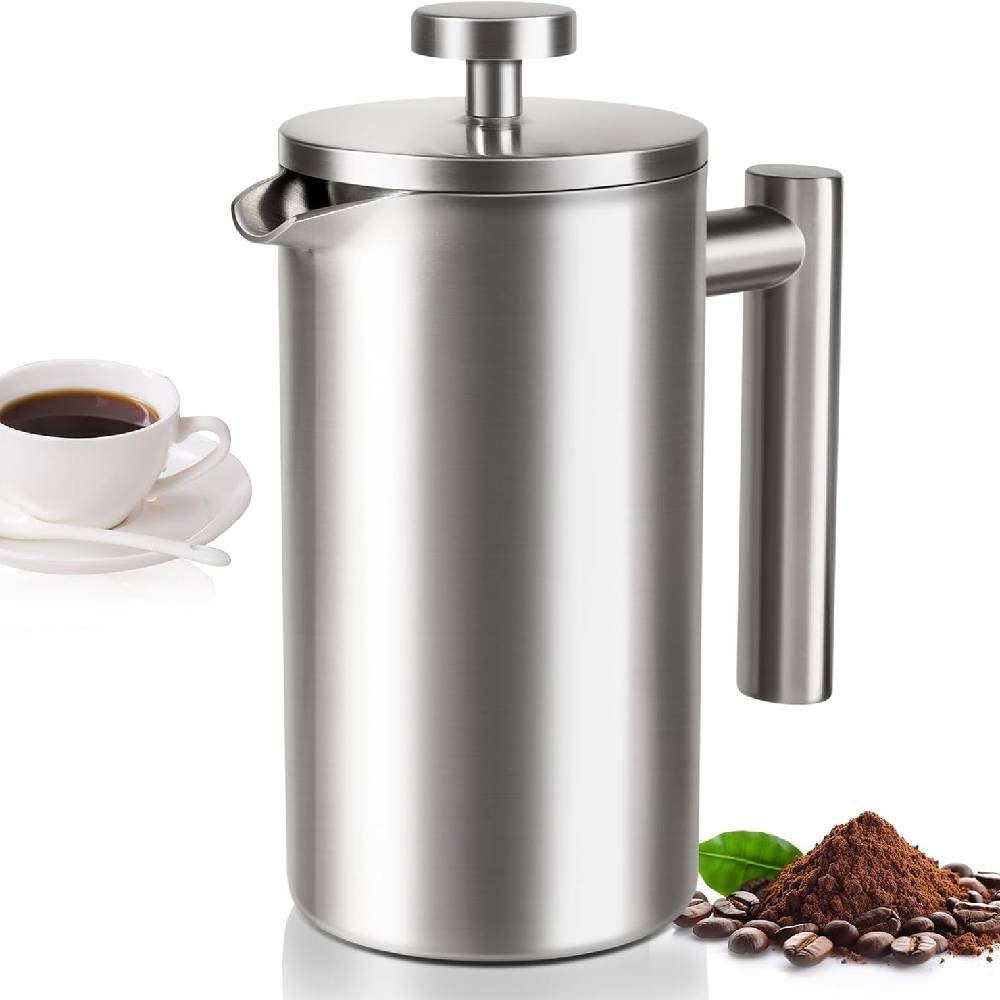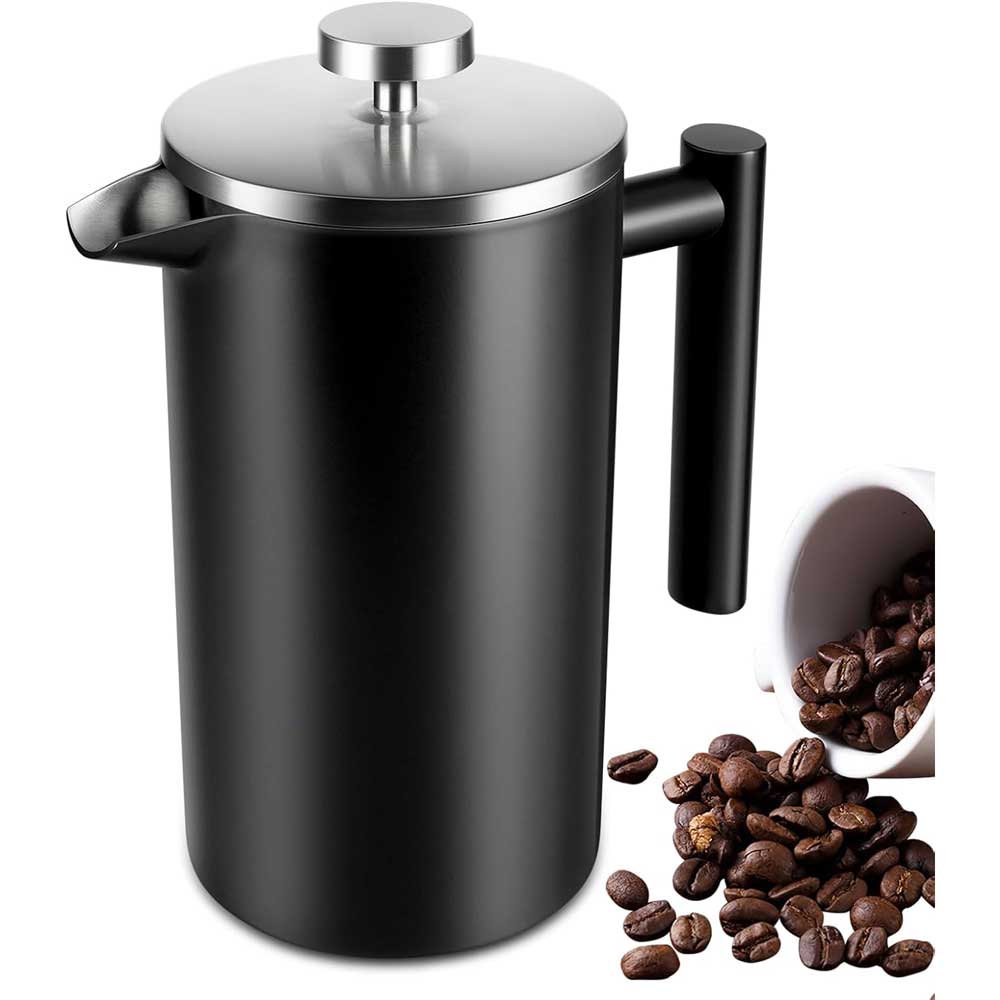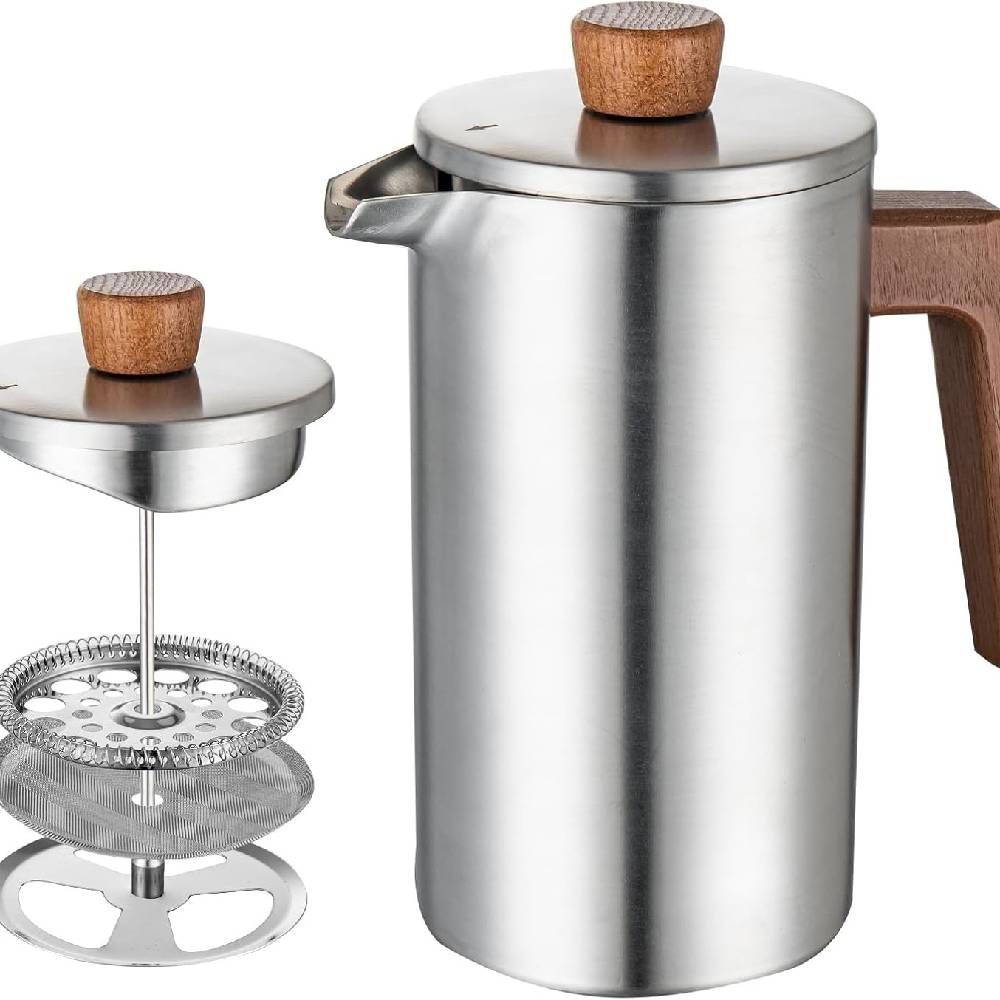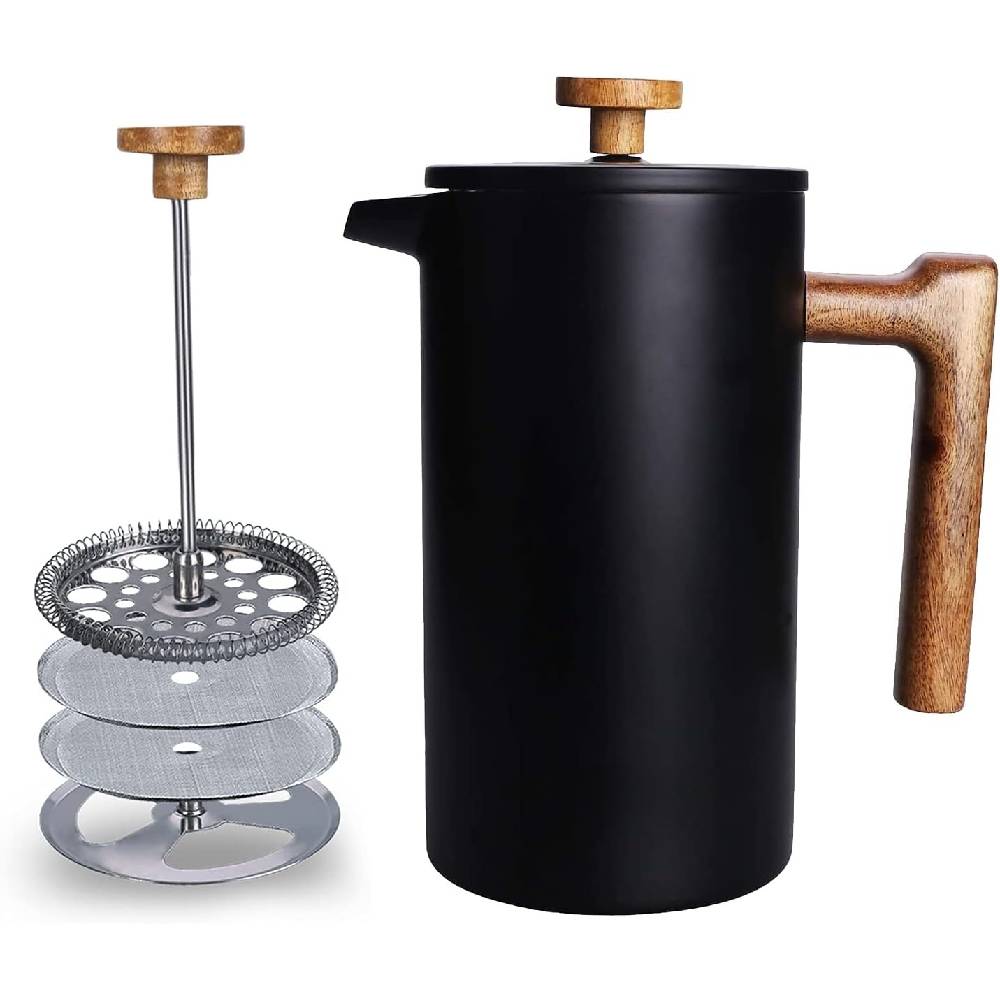
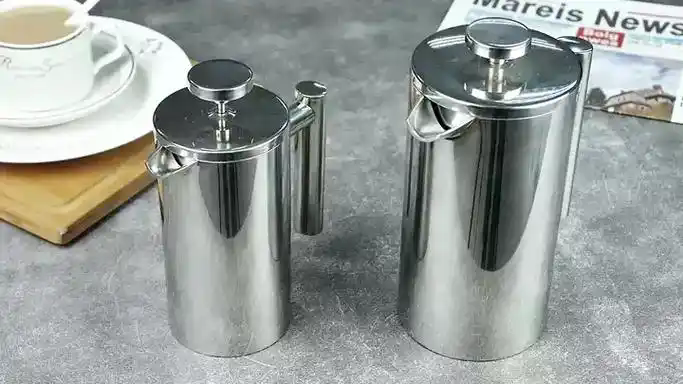
Two stainless steel French presses can look almost identical but carry very different factory costs. If a buyer compares only the unit price, hidden differences in steel grade, wall thickness, tooling, surface finish, packaging, testing, and order quantity can easily lead to an inaccurate purchasing decision. For importers and private-label brands, understanding these cost drivers before placing an order helps prevent unexpected surcharges, quality compromises, and margin pressure later.
The main stainless steel French press manufacturing cost factors are material grade and weight, production processes, tooling, surface finish, logo customization, packaging, order quantity, and quality requirements. As an experienced stainless steel kitchenware Manufacturer and Supplier, Yesheng evaluates these factors together to develop practical OEM and ODM quotations.
1. Material Grade, Weight and Thickness
Material is usually one of the first factors affecting the factory cost of a stainless steel French press. However, material grade alone does not determine the final price. The amount of stainless steel used in the product can have an equally important impact.
Material Grade
Common stainless steel options for French presses include 201 and 304 stainless steel. The appropriate grade depends on the target market, product positioning, corrosion-resistance expectations, and buyer requirements.
- 201 stainless steel: Often considered when controlling product cost is important and the application does not require the same corrosion resistance as 304.
- 304 stainless steel: Commonly selected for higher-end kitchenware programs where corrosion resistance, durability, and market positioning are important.
Buyers should therefore specify the required material grade in the RFQ instead of simply requesting stainless steel. Otherwise, quotations from different suppliers may not be directly comparable.
Weight and Wall Thickness
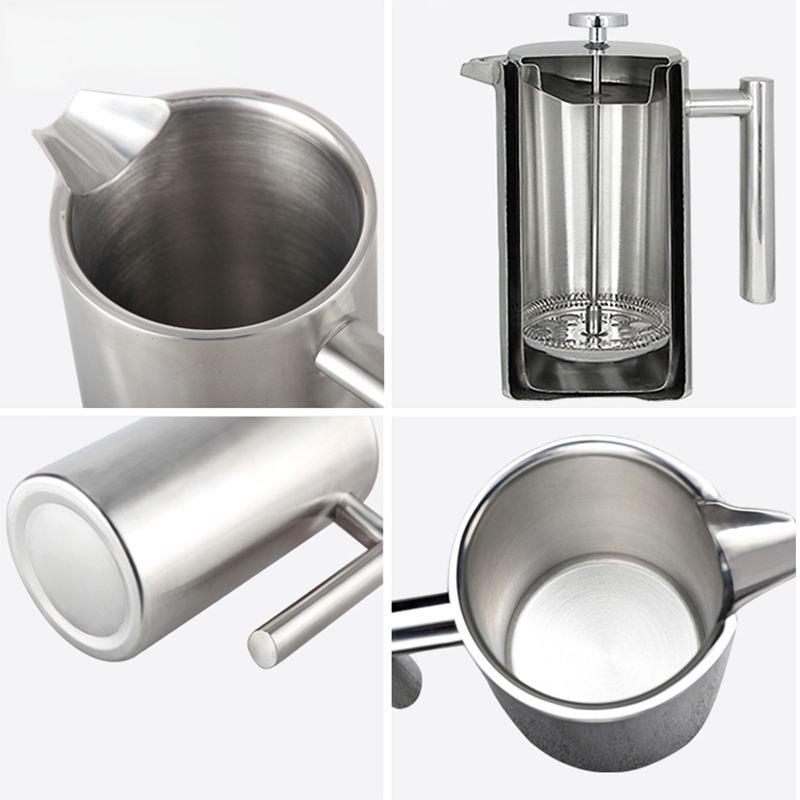
A heavier French press normally consumes more raw material and may also require different forming or production parameters. Increasing wall thickness can improve rigidity, but it also increases material consumption and shipping weight.
| Specification Factor | Potential Cost Impact | Buyer Consideration |
|---|---|---|
| Stainless steel grade | Low to high | Specify 201 or 304 according to the product requirement |
| Wall thickness | Direct material impact | Balance rigidity, weight and target retail price |
| Product weight | Material and freight impact | Confirm target weight and acceptable tolerance |
| Capacity | Material and production impact | Define capacity and dimensions before quotation |
For an OEM project, it is useful to provide the Manufacturer with a target capacity, dimensions, material grade, and approximate thickness. This gives the Supplier a much clearer basis for calculating the cost.
 2. Tooling, Finish and Logo Method
Customization can significantly change the factory cost of a French press. A standard product using existing tooling and a simple finish is fundamentally different from a completely Customizable product requiring new tooling and several additional processes.
Tooling Requirements
If a buyer selects an existing factory model, the tooling cost may be limited or already included in the product development history. A completely new shape can require new forming tools, fixtures, jigs, molds, or other production aids.
Before asking for a tooling quotation, buyers should clarify:
- Whether the body shape is based on an existing model
- Whether the handle design is customized
- Whether the lid or plunger assembly requires modification
- Whether the tooling belongs to the buyer
- Whether tooling costs are one-time or included in the unit price
Surface Finish
Surface treatment is another important cost variable. A polished French press generally requires different processing from a brushed or satin-finished product.
Possible requirements include:
- Mirror polishing
- Satin or brushed finishing
- Matte finishing
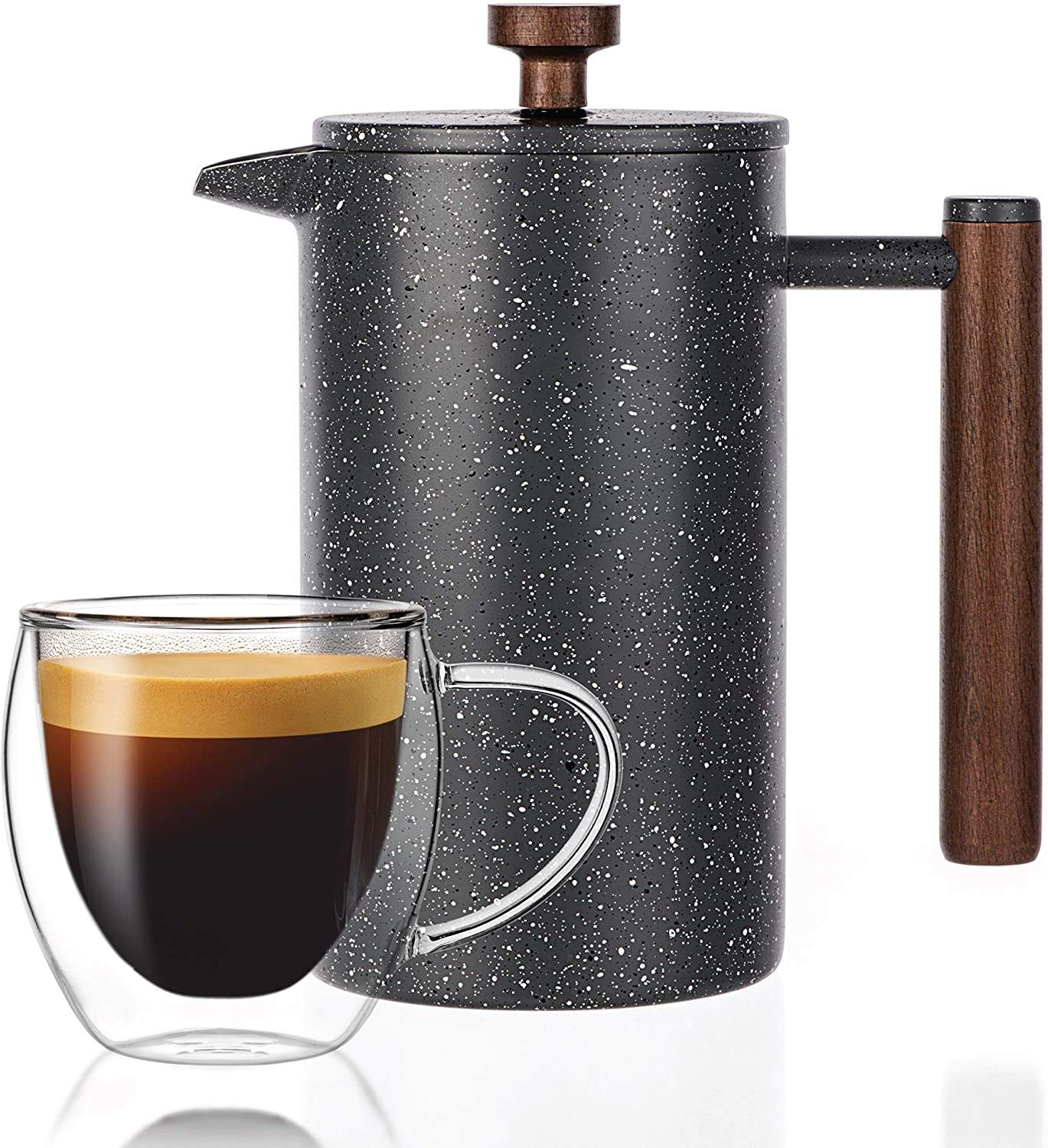
- Colored surface treatment where technically suitable
- Different finishes for different components
The more demanding the visual standard, the more important process control becomes. A premium finish may require additional polishing, inspection, handling, and rejection control.
Logo and Branding Method
Private-label buyers should also specify the logo method. Laser engraving, etching, printing, stamping, and other branding processes have different tooling, labor, and setup requirements.
- Confirm the logo position.
- Confirm the logo size and artwork.
- Choose the branding method.
- Confirm whether a sample approval is required.
- Include the branding process in the final quotation.
For an OEM or ODM program, providing the logo artwork and branding requirements at the quotation stage helps avoid price changes after sampling.
 3. Packaging and Order Quantity
Packaging is sometimes overlooked when calculating the factory cost of a French press. For export orders, however, the packaging specification can influence both unit cost and shipping efficiency.
Packaging Structure
A basic export package may differ considerably from a premium retail package with printed artwork and protective inserts.
- Polybag or protective sleeve
- Individual color box
- Printed retail packaging
- Paper or molded protective inserts
- Master carton configuration
- Custom labels and barcodes
A Wholesaler may prioritize efficient carton packing and cost control, while a private-label retail brand may require stronger visual presentation. Neither approach is automatically more appropriate; the packaging should match the sales channel and logistics requirements.
Order Quantity and Production Efficiency
Order quantity affects production efficiency, material purchasing, setup costs, packaging procurement, and production scheduling. A small trial order can therefore have a higher unit cost than a larger production run.
| Order Situation | Typical Cost Considerations | What Buyers Should Confirm |
|---|---|---|
| Sample or prototype | Development and setup costs can be relatively high per unit | Sample charge and tooling arrangement |
| Small trial order | Lower production efficiency and packaging purchasing quantities | MOQ and unit price |
| Regular wholesale order | Better production and purchasing efficiency | Production lead time and carton quantity |
| Large OEM program | Potentially improved cost allocation | Forecast, production capacity and packaging plan |
When requesting an RFQ, buyers should provide at least an estimated order quantity. Asking for a price without quantity can make the quotation difficult to evaluate accurately.
4. Quality and Testing Requirements
Quality requirements can also affect factory cost, particularly when a buyer requires additional inspections, documentation, laboratory testing, or special production controls.
Basic Quality Control
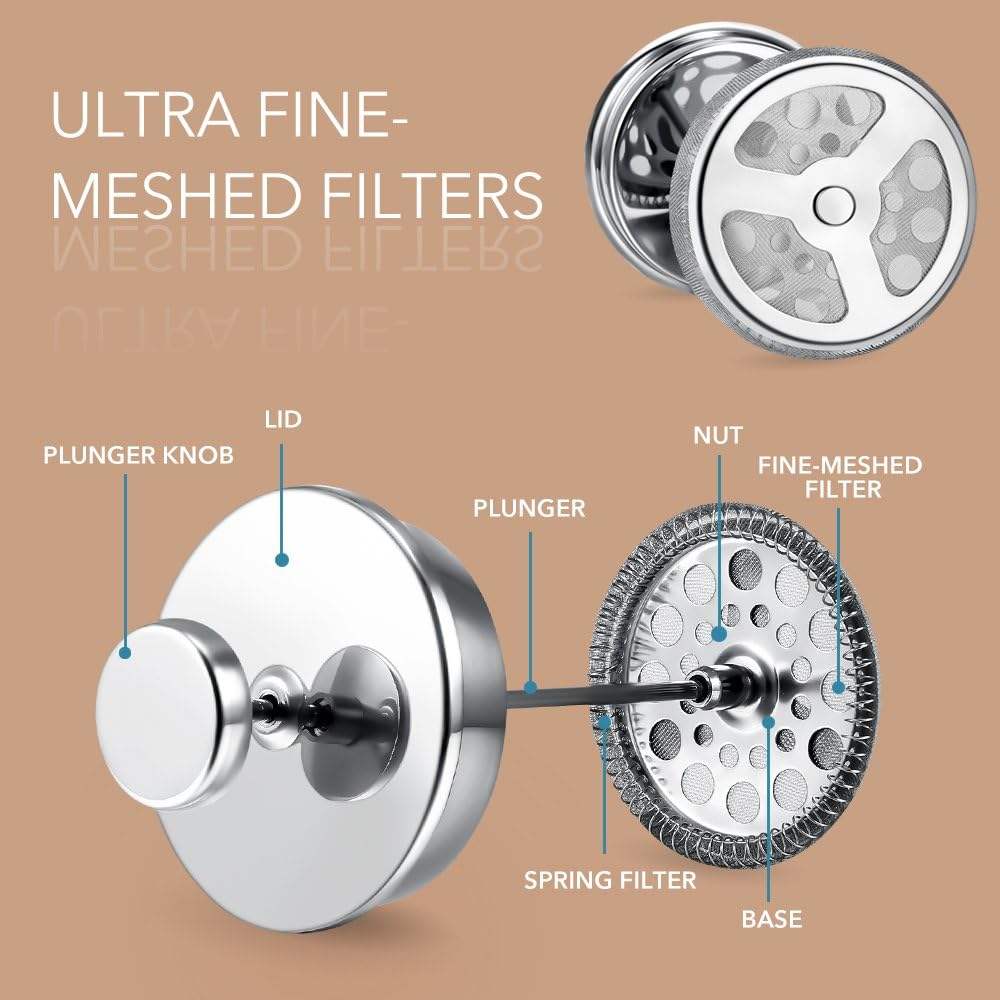
A standard French press quality inspection may cover dimensions, appearance, assembly, polishing, logo position, plunger operation, and packaging condition.
For a more demanding private-label program, the buyer may also specify:
- Material verification
- Dimensional tolerances
- Surface-finish standards
- Plunger movement and fit
- Leakage or functional checks where applicable
- Packaging inspection
- Third-party inspection before shipment
Testing Should Match the Market
Testing requirements should be discussed before production rather than added after the goods are finished. The applicable requirements depend on the destination market, product construction, materials, and buyer’s compliance program.
A Supplier can normally provide a quotation based on the agreed inspection scope. If third-party laboratory testing is required, the buyer should clarify whether testing is included in the product price or charged separately.
For Yesheng, discussing the inspection requirements during the quotation and sampling stage helps establish a clearer production specification before mass production begins.
 5. How to Compare Like-for-Like Quotations
The lowest quotation is not necessarily the lowest actual purchasing cost if the specifications are different. A practical comparison should convert each quotation into the same technical and commercial basis.
Use a Quotation Checklist
- Material: Confirm stainless steel grade for every relevant component.
- Thickness: Check whether the quoted products use the same material thickness.
- Weight: Compare finished product weight and acceptable tolerance.
- Capacity: Confirm that the nominal capacity and dimensions are equivalent.
- Finish: Make sure polishing, brushing, coloring, or other treatments are identical.
- Logo: Confirm logo method, position, and number of logo locations.
- Packaging: Compare individual packaging, inserts, labels, and master cartons.
- Tooling: Check whether tooling is included and who owns it.
- Inspection: Confirm whether factory inspection or third-party inspection is included.
- Commercial terms: Compare MOQ, Incoterm, payment terms, and quotation validity.
Ask Suppliers to Quote the Same Specification
For example, instead of sending a request for a 600 ml stainless steel French press and asking several factories for their best price, provide a specification sheet covering material, thickness, dimensions, finish, logo, packaging, quantity, and inspection requirements.
This approach allows the buyer to compare the Manufacturer, Supplier, and other Wholesaler sources on a much more consistent basis.
Separate Product Cost From Development Cost
For customized projects, buyers should distinguish between recurring unit costs and one-time development costs.
- Recurring costs: stainless steel, components, labor, finishing, assembly, packaging, and normal quality control.
- One-time costs: tooling, special fixtures, prototype development, and certain setup costs.
- Optional costs: laboratory testing, third-party inspection, special packaging, or additional certifications.
This structure makes it easier to calculate the expected landed cost and evaluate whether a customized French press fits the target retail price and margin.
6. A Practical Cost-Planning Process for Buyers
For importers, retailers, and private-label brands, the following process can make quotation discussions more efficient:
- Define the target market and product positioning.
- Confirm capacity, dimensions, material grade, and thickness.
- Decide whether to use an existing design or develop an OEM/ODM model.
- Specify surface finish and branding requirements.
- Define individual and master-carton packaging.
- Provide estimated order quantity or annual demand.
- Confirm quality inspection and testing requirements.
- Request samples before approving mass production.
- Compare quotations using identical specifications.
This process gives the factory enough information to evaluate the real production requirements instead of estimating from a product photo alone.
7. Why the Factory Cost Is More Than the Stainless Steel Price
For a stainless steel French press, raw material is only one part of the production equation. Forming, welding or assembly where applicable, polishing, surface treatment, branding, quality control, packaging, tooling allocation, and production efficiency all contribute to the final factory price.
For B2B buyers, the most useful question is therefore not simply how much does this French press cost. A better question is what exact specification is included in this quotation.
Yesheng works with stainless steel kitchenware projects and can discuss material, finish, branding, packaging, and production requirements with importers, retailers, and private-label brands. For customized French press projects, a clear specification allows both sides to evaluate feasibility and cost before sampling.
Conclusion: Build the Specification Before Comparing the Price
When sourcing stainless steel French presses, define material, thickness, finish, tooling, logo, packaging, quantity, and quality requirements first. Send your specification to Yesheng for a practical OEM or ODM quotation based on your target market and production needs.