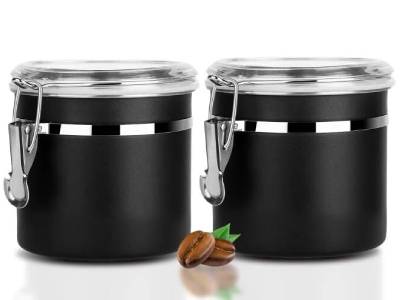
 Choosing a Manufacturer for a B2B stainless steel canister program is more than comparing unit prices. Weak production control can lead to inconsistent quality, delayed shipments, packaging problems, and costly rework. These issues can damage margins and customer trust. A structured evaluation helps buyers identify a Supplier with suitable factory capacity, quality-control evidence, customization capability, and reliable production processes before placing a larger order.
The best stainless steel canister manufacturer should demonstrate in-house production capability, documented quality controls, practical MOQ and lead-time terms, and OEM or ODM support. Jiangmen Yesheng Metal Products Co., Ltd. combines mature stainless steel production equipment with independent export capability, giving B2B buyers a basis for evaluating production, customization, and supply coordination.
1. Check Factory Capability and In-House Processes
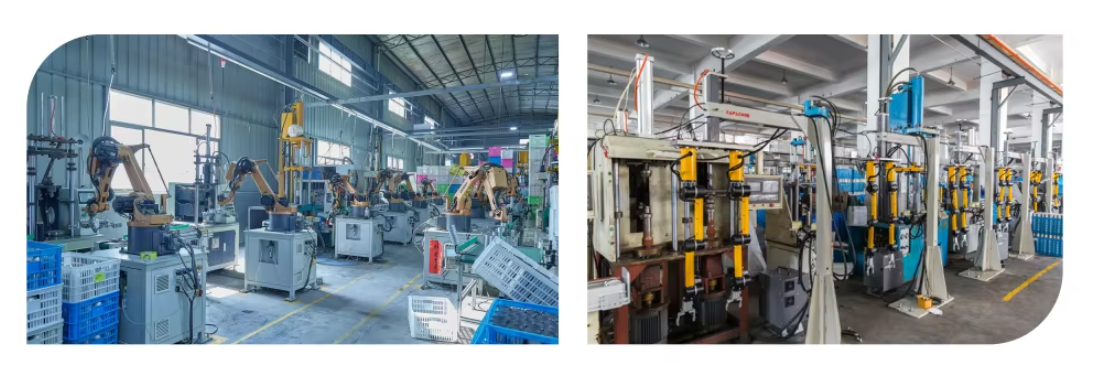
A credible stainless steel canister manufacturer should be able to explain how the product moves from material processing to forming, welding, finishing, inspection, packing, and shipment. Buyers should look beyond a factory showroom and examine whether the Supplier has sufficient equipment and production resources for the intended program.
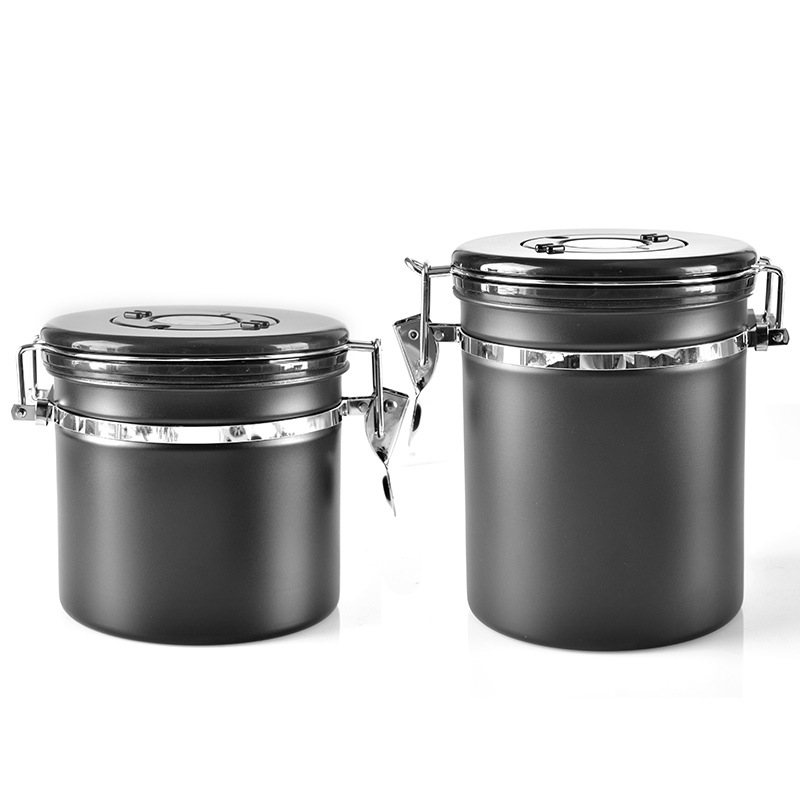
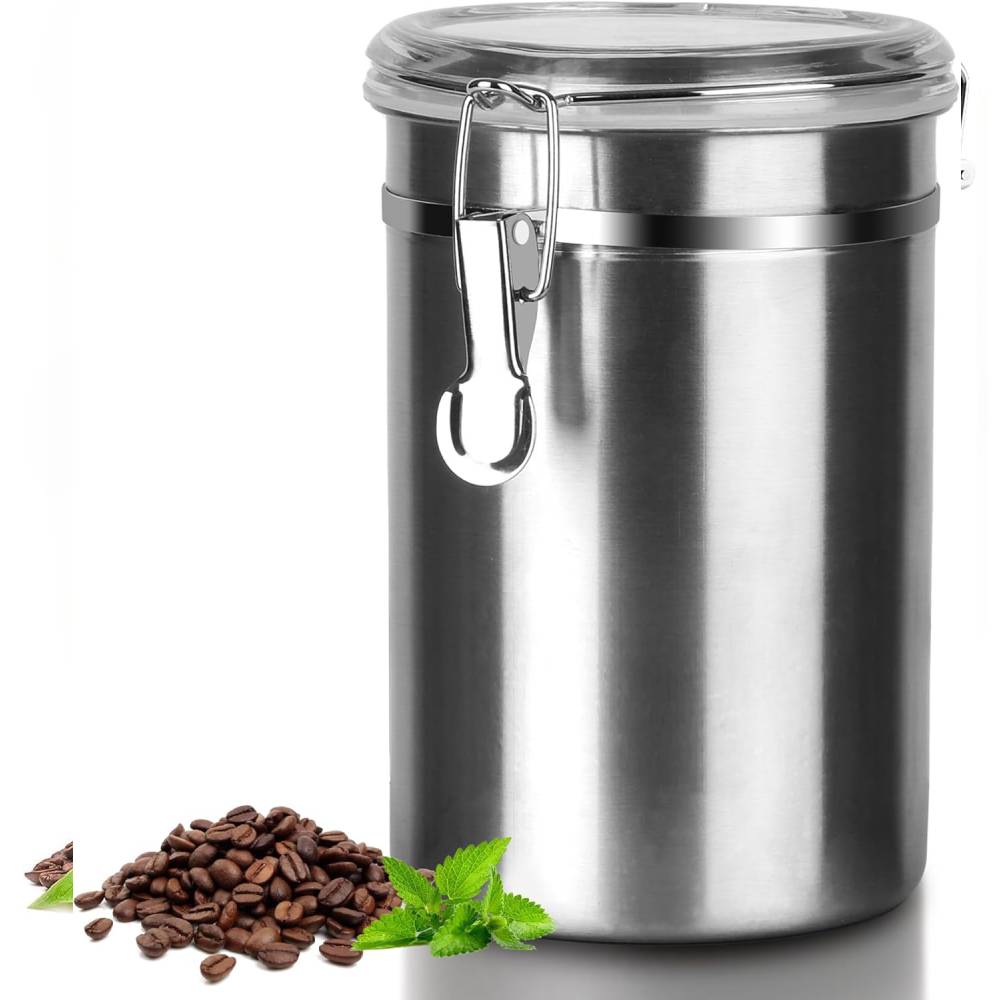
Jiangmen Yesheng Metal Products Co., Ltd. was established in 2017 and has been engaged in stainless steel products for eight years. Its product range includes stainless steel canisters, salad bowls, French press coffee makers, bag savers, and trash cans. Its products are sold in European and American markets. :contentReference[oaicite:0]{index=0}
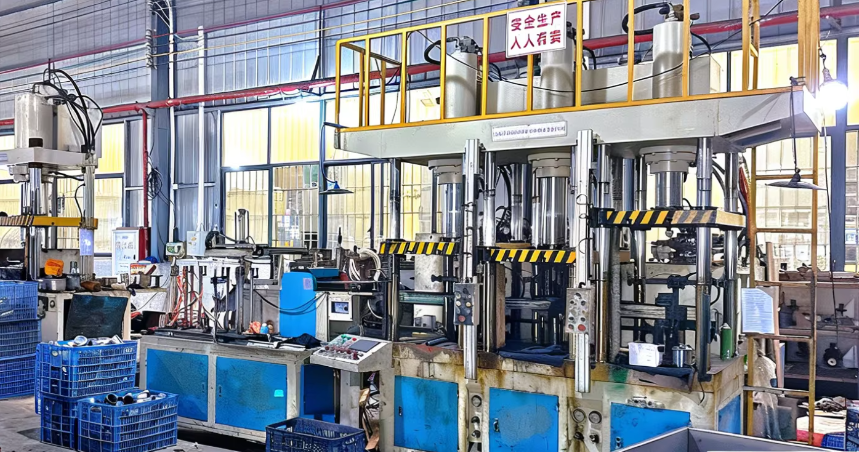
The factory information also indicates substantial hardware production capacity:
- 19 hydraulic presses, including 550-ton and 350-ton machines
- 17 additional smaller-tonnage oil presses for products such as coffee cans and salad bowls
- 26 punching machines
- 4 welding machines
- 3 cutting machines
- 2 die-casting machines
- 2 rolling machines
The stated equipment can handle orders of more than 100,000 pieces, which is relevant when a Wholesaler, importer, or supermarket buyer needs to evaluate whether a factory can support volume programs. :contentReference[oaicite:1]{index=1}
What B2B Buyers Should Verify
- Ask which processes are completed in-house.
- Confirm whether the factory has equipment appropriate for the required product size and construction.
- Ask how production capacity is allocated during peak seasons.
- Review whether the Manufacturer can coordinate production, procurement, packing, and export.
- Compare the factory’s demonstrated equipment with the expected annual purchasing volume.
| Factory Factor | What to Examine | Why It Matters |
|---|---|---|
| Forming capacity | Presses and related equipment | Supports consistent product shaping and volume production |
| Welding capacity | Number and application of welding machines | Relevant for structural components and product consistency |
| Production scale | Equipment and order capacity | Helps assess suitability for larger B2B programs |
| Export capability | Independent export rights and process | Can simplify coordination from production to shipment |
2. Request Evidence for Quality Control
Quality claims should be supported by observable production information rather than general statements. Buyers evaluating a stainless steel canister Supplier should request samples and clarify material specifications, construction details, finishing standards, inspection procedures, and packaging requirements.
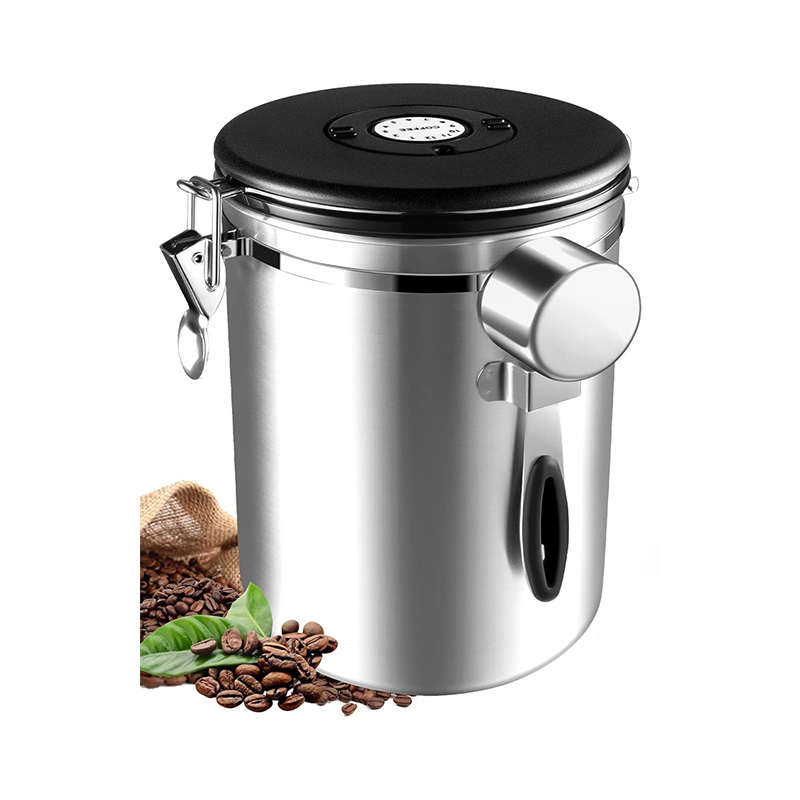
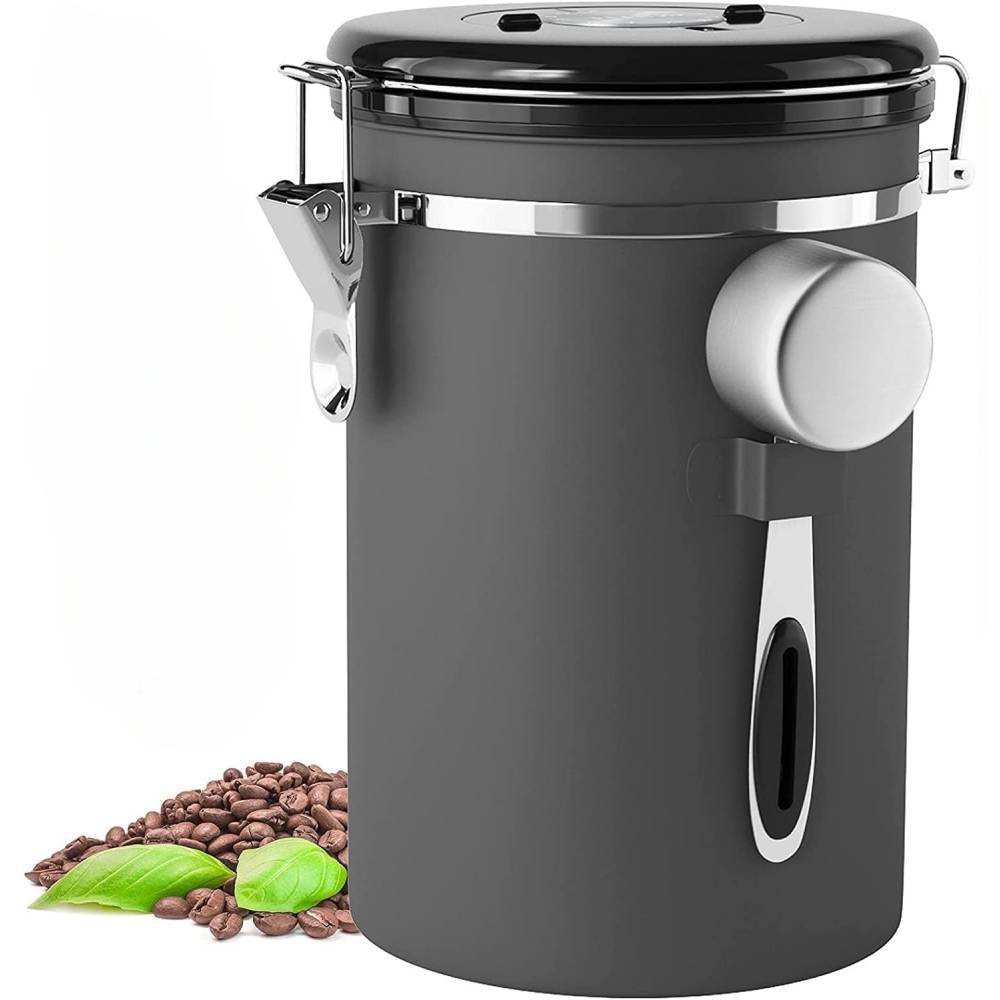
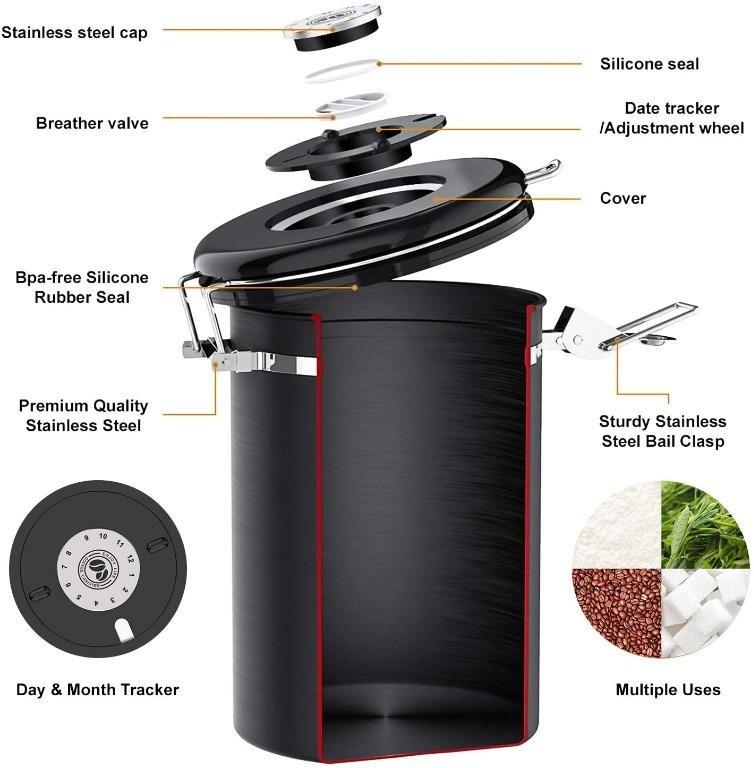
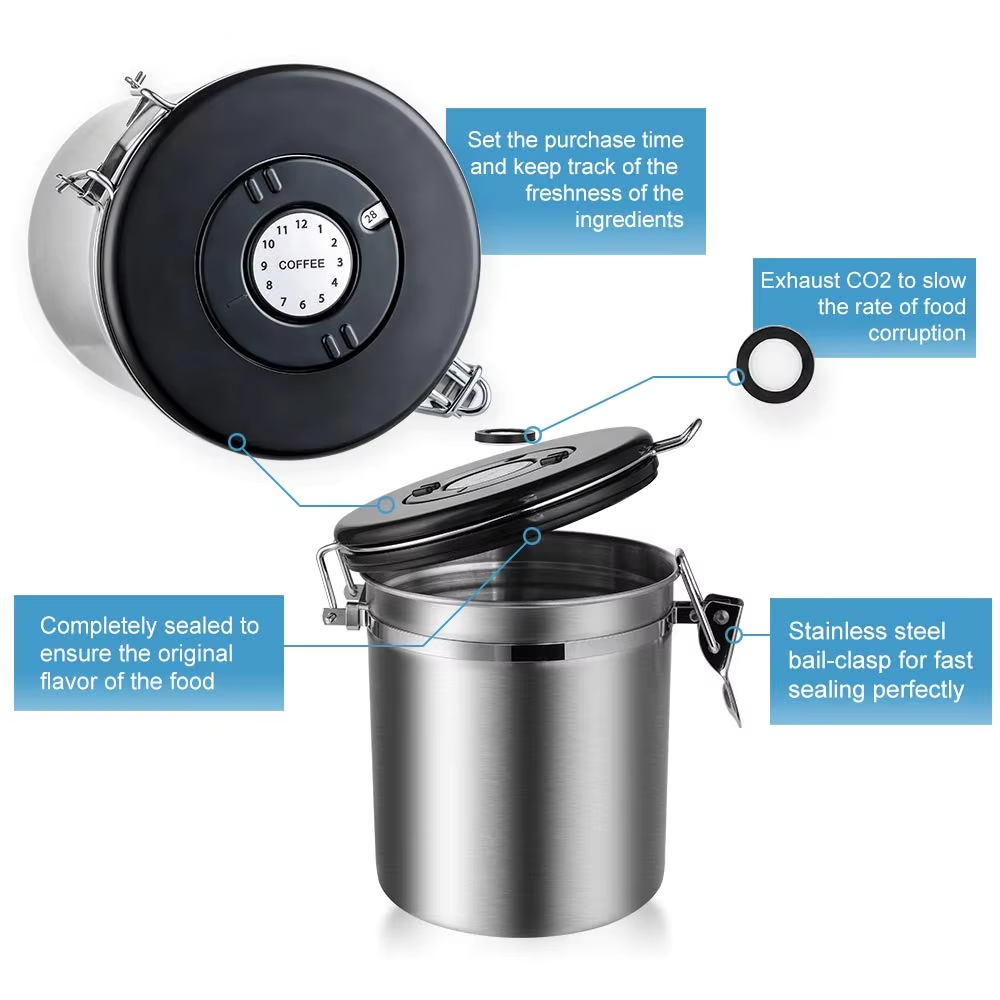
The product information for Yesheng’s stainless steel canister states that the coffee storage canister uses 304 stainless steel and is designed with a silicone rubber seal and one-way CO2 valve. It also includes a date tracker, stainless steel scoop, and scale line. :contentReference[oaicite:2]{index=2}
Quality Questions to Include in the Supplier Evaluation
- What stainless steel grade is specified for the product?
- Can the Supplier provide a production sample before bulk production?
- How are dimensions and appearance checked during production?
- How are lids, seals, valves, and other functional components inspected?
- What packaging standard is used for transportation?
- Can inspection requirements be agreed before mass production?
For B2B buyers, the sample should be treated as a reference standard rather than simply a visual demonstration. The final purchase specification should clearly identify material, dimensions, finish, components, packaging, logo requirements, and acceptable quality expectations.
A Practical Sample Evaluation
- Check the stainless steel appearance and surface finish.
- Measure key dimensions against the agreed specification.
- Inspect the lid, seal, valve, scoop, and date-tracking features where applicable.
- Review the opening and closing operation.
- Evaluate packaging protection and labeling.
- Record approved sample details before mass production.
3. Clarify MOQ, Samples, and Lead Times Before Ordering
Price discussions can become misleading if MOQ, sampling, production scheduling, and delivery terms are not defined at the same time. A competitive quotation is useful only when the commercial conditions are comparable.
Buyers should ask the Supplier to provide clear answers to the following:
- What is the MOQ for standard stainless steel canisters?
- Does the MOQ change for Customizable products?
- What is the sample charge and sample lead time?
- How long does bulk production normally require after sample approval?
- Does the lead time change during peak production periods?
- What happens if the requested quantity changes after production scheduling?
| Evaluation Item | Recommended Buyer Question | Decision Focus |
|---|---|---|
| MOQ | What quantity is required for standard and customized orders? | Fit with purchasing volume |
| Sample | Can a production sample be reviewed before bulk production? | Product and specification validation |
| Lead time | What is the expected production period after approval? | Inventory and selling-season planning |
| Delivery coordination | Who manages export and shipment documentation? | Supply-chain efficiency |
Yesheng established its own import and export company in 2023 and has independent export rights. Its stated process covers production, procurement, sales, and export, which may be relevant to buyers seeking one-stop supply coordination. :contentReference[oaicite:3]{index=3}
4. Evaluate OEM, ODM, and Packaging Capability
For retailers, distributors, and private-label programs, a suitable Manufacturer needs to support more than standard products. OEM and ODM requirements can include logo application, product specifications, components, packaging, and product presentation.
A buyer should distinguish between a Supplier that merely accepts a logo file and a factory that can coordinate the wider production process. The evaluation should cover:
- Logo and branding requirements
- Product size and capacity adjustments
- Material and component specifications
- Lid, seal, valve, and accessory requirements
- Individual product packaging
- Master carton configuration
- Barcode, label, and retail-packaging requirements
- Sample approval before bulk production
Yesheng’s factory has multiple production workshops and equipment, including a dedicated CNC machine for mold making. The factory states that its range of production equipment allows it to develop production plans around different customer requirements. :contentReference[oaicite:4]{index=4}
 When Customizable Production Makes Sense
OEM can be appropriate when a buyer already has a defined product specification and branding requirements. ODM can be useful when the buyer wants to adapt an existing product concept. In either case, the buyer should document the approved design and production requirements before placing the bulk order.
5. Identify Supplier Audit Red Flags
A factory audit does not need to be complicated. The objective is to identify gaps between what a Supplier says it can provide and what its production system can demonstrate.
Red Flags to Watch For
- Unclear answers about where production processes are completed
- Inability to provide a representative sample
- Unclear material specifications
- Large differences between sample quality and bulk-order expectations
- Unrealistically short lead times without a production explanation
- Unclear MOQ or frequently changing commercial terms
- No clear process for approving samples and specifications
- Packaging requirements discussed only after production begins
- Limited communication about production scheduling and export procedures
A Simple Manufacturer Decision Process
- Confirm the factory’s product and production experience.
- Review equipment and in-house processes.
- Request and evaluate a representative sample.
- Confirm material, construction, and functional specifications.
- Clarify MOQ, sample terms, production lead time, and delivery coordination.
- Discuss OEM, ODM, logo, and packaging requirements.
- Document the approved specifications before placing the bulk order.
This approach helps buyers compare manufacturers on operational suitability rather than relying only on the lowest quotation. For a B2B program, the most suitable stainless steel canister manufacturer is generally the one whose capabilities, production process, communication, and commercial terms match the actual requirements of the purchasing program.
 Choose a Supplier Based on Evidence, Not Price Alone
Before selecting a stainless steel canister manufacturer, request samples, verify production capability, clarify MOQ and lead time, and define OEM or ODM requirements. Buyers can then approach Yesheng for product selection, customization discussions, and a quotation based on their specific program.