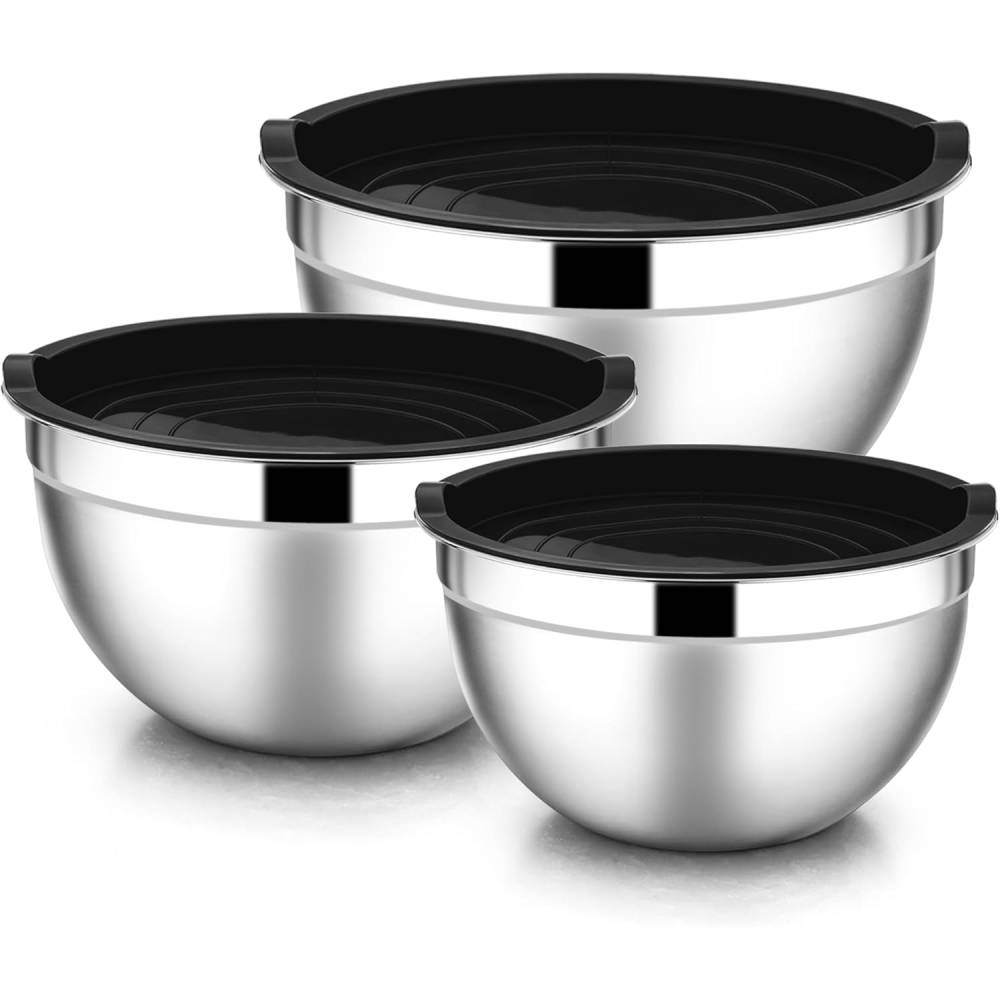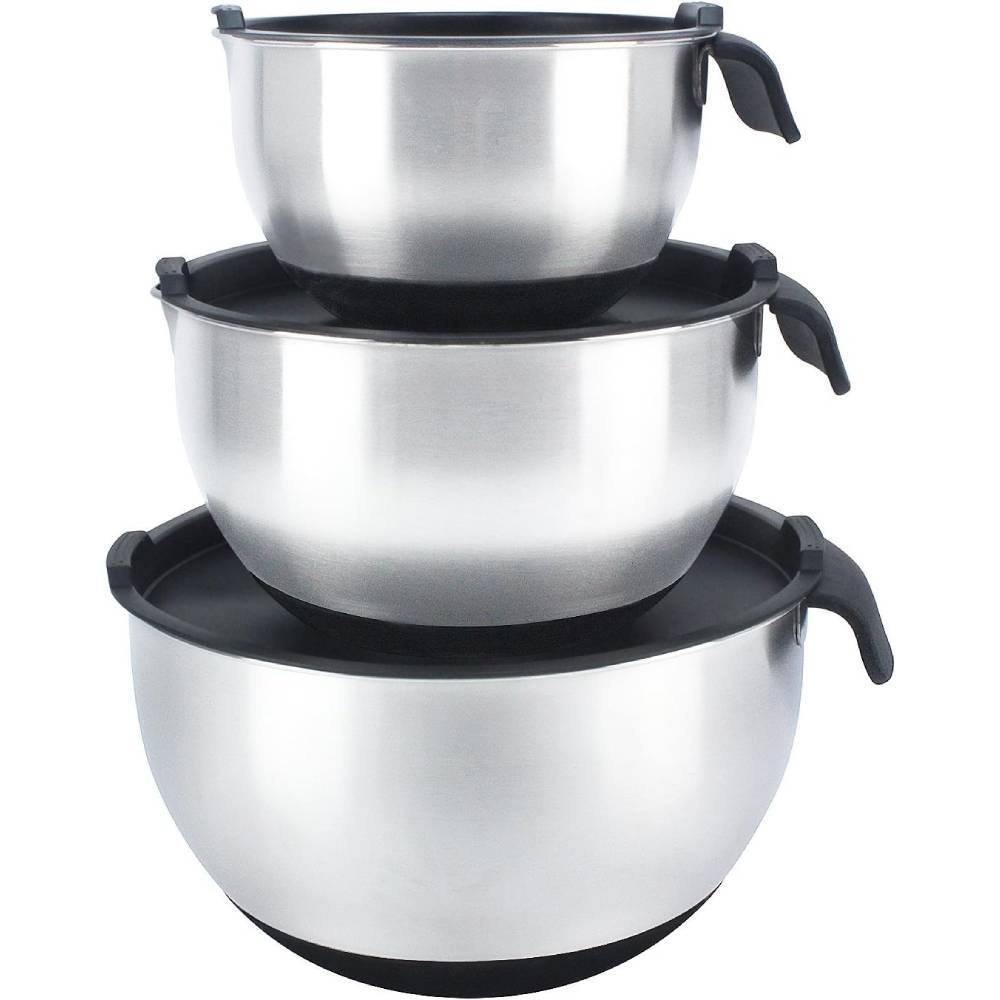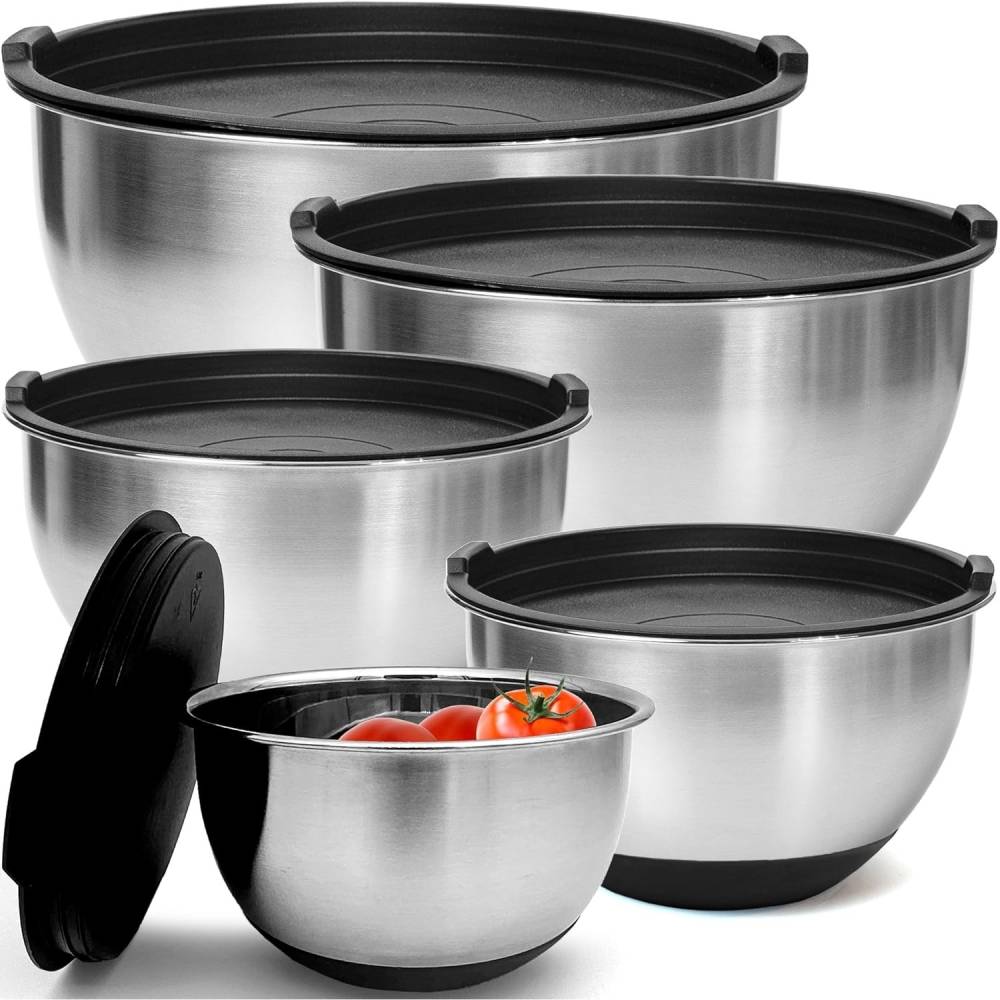
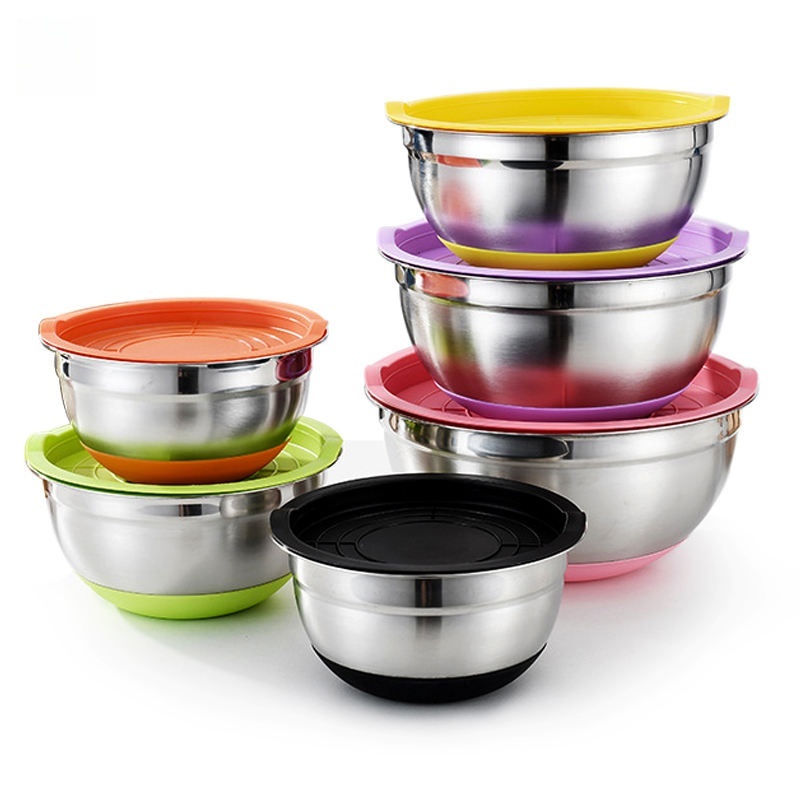
For buyers sourcing stainless steel mixing bowls, the material grade can affect corrosion resistance, food-contact suitability, appearance, service life, and overall purchasing cost. Choosing a lower-cost grade without considering the application may lead to staining, surface deterioration, or inconsistent product positioning. For a Manufacturer, Supplier, or Wholesaler, these issues can increase returns and damage customer confidence. The key is to match the stainless steel mixing bowl material grade with the bowl usage, market requirements, and expected product life.
For most food-contact stainless steel mixing bowls, 304 stainless steel is the practical standard because it provides a strong balance of corrosion resistance, durability, food-contact suitability, and cost. 201 stainless steel can be considered for more cost-sensitive applications. Yesheng has experience producing stainless steel salad bowls and related kitchenware for European and American markets.
201 and 304: Which Grade Fits the Application?
201 and 304 stainless steel can both be used for stainless steel kitchen products, but they are not interchangeable in every purchasing situation. The appropriate stainless steel mixing bowl material grade depends on the environment, expected durability, product positioning, and target market.
| Factor | 201 Stainless Steel | 304 Stainless Steel |
|---|---|---|
| Relative cost | Generally more cost-oriented | Generally higher cost |
| Corrosion resistance | Suitable for less demanding environments | Higher resistance for common kitchen conditions |
| Typical positioning | Economy and price-sensitive products | Mid-range to premium kitchenware |
| Food-contact applications | Requires confirmation of applicable requirements | Commonly selected for food-contact kitchenware |
| Yesheng product reference | 18/0 stainless steel is used for the bag saver | 304 stainless steel is used for the French press and canister |
For buyers focused strongly on purchase price, 201 may provide an option when the operating environment is relatively mild. For products expected to face frequent washing, moisture, food residues, or longer-term use, 304 is often a more suitable specification.
When 201 May Be Considered
- Price-sensitive product lines where material cost is a major purchasing factor.
- Applications with relatively mild exposure to moisture and corrosive substances.
- Products positioned for basic household use rather than demanding commercial environments.
- Projects where the buyer has already confirmed the required material and applicable market standards.
When 304 Is the Safer Choice
- Kitchenware designed for regular food preparation.
- Products requiring stronger corrosion resistance and long-term appearance.
- Higher-value or premium product lines where durability is important.
- Markets where buyers expect clearly specified food-contact materials.
Yesheng product information provides a useful reference point: its stainless steel French press is made from 304 grade stainless steel, while its stainless steel coffee canister also uses 304 stainless steel. Its bag saver uses 18/0 stainless steel, demonstrating that material selection can vary according to product function and positioning.
 Food-Contact Versus Non-Food-Contact Parts
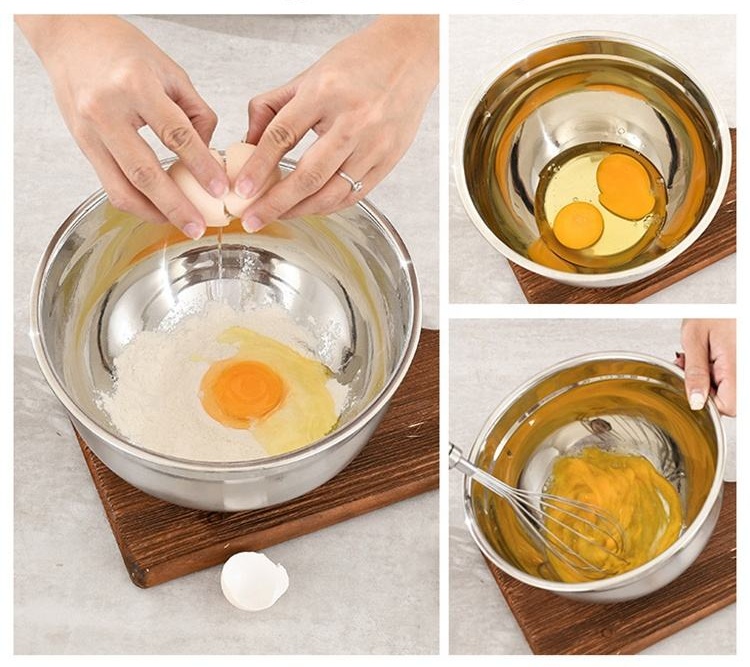
One important sourcing question is whether every stainless steel component of a product has the same food-contact requirement. A mixing bowl is primarily a food-contact product, so the material specification for the bowl itself deserves particular attention. However, handles, brackets, decorative components, lids, and other parts may have different functional requirements.
For the Main Bowl
The main bowl directly contacts ingredients, so buyers should specify the intended stainless steel grade rather than simply requesting stainless steel. A clear material description helps the Manufacturer quote the correct product and reduces the risk of receiving an unspecified alternative.
For Supporting Components
Some supporting parts may not directly contact food. Their requirements can therefore focus more heavily on strength, appearance, corrosion resistance, assembly, and cost. Nevertheless, the final specification should be reviewed according to the intended use and destination market.
- Identify every component that directly contacts food.
- Specify the required stainless steel grade for those components.
- Identify non-food-contact components separately.
- Confirm surface finish, thickness, and construction requirements.
- Ask the Supplier to confirm the material specification before mass production.
 Corrosion and Cost Trade-Offs
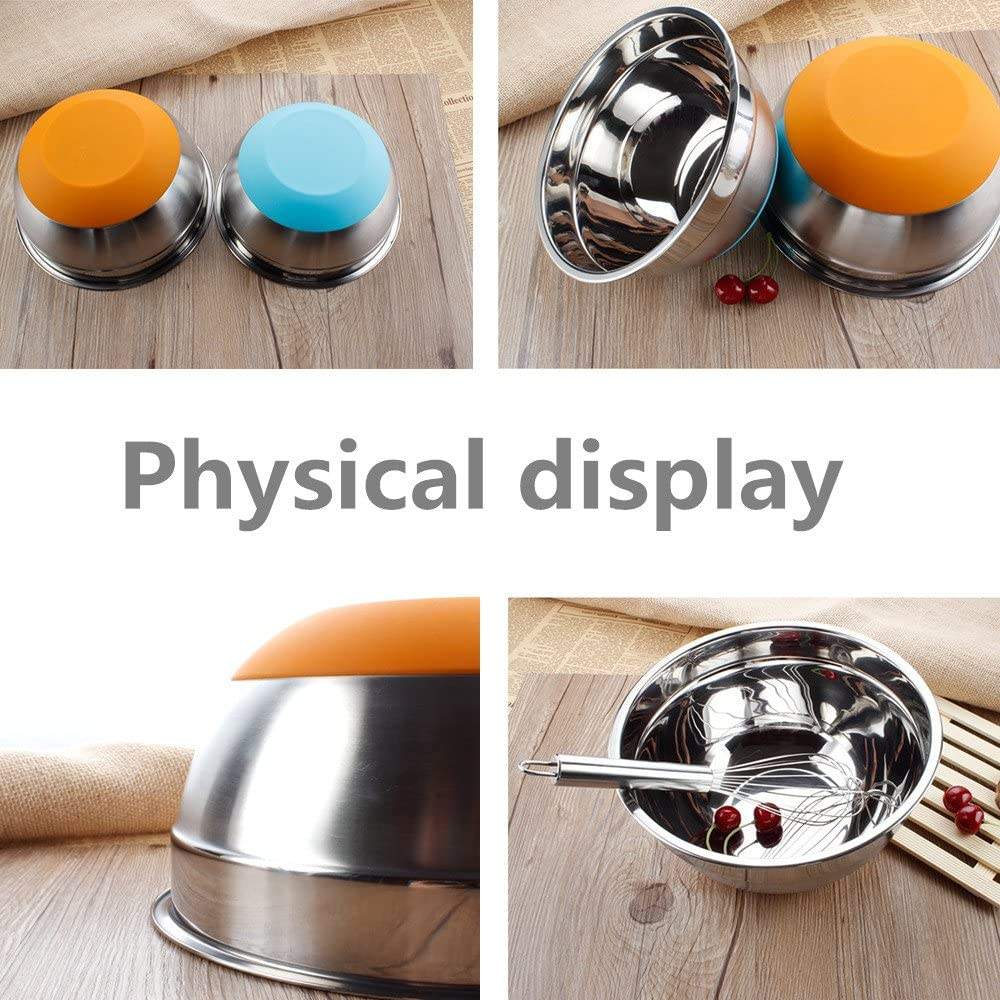
Material selection is not simply a choice between the cheapest and the most corrosion-resistant option. Buyers need to consider the total commercial value of the bowl. A lower initial cost may be attractive for an entry-level product, while a higher-grade material may better support a premium positioning and longer expected service life.
| Purchasing Priority | Suggested Direction | Reason to Evaluate |
|---|---|---|
| Lowest material cost | Consider 201 | Can support price-sensitive product positioning |
| Balanced performance and cost | Consider 304 | Strong balance for common kitchen use |
| Frequent washing and moisture | Prefer 304 | Higher corrosion resistance is valuable |
| Premium kitchenware | Prefer 304 | Supports durability and product positioning |
Buyers should also remember that stainless steel grade is only one part of product quality. Forming quality, welding, edge treatment, surface finishing, dimensional consistency, and quality control can influence the final customer experience. A well-defined specification therefore needs to cover both material and manufacturing requirements.
How to Verify the Stainless Steel Material Grade
Material grade should be treated as a purchasing specification, not merely a sales description. When placing an OEM or ODM order, buyers can establish a verification process before mass production.
- Write the grade into the specification. State the required grade for the bowl instead of using only the general term stainless steel.
- Request material documentation. Ask the Supplier what documentation is available to identify the supplied material.
- Confirm the production specification. Ensure the material used in the production order matches the approved sample and quotation.
- Consider independent testing. For large-volume or high-value orders, third-party material testing can provide additional verification when commercially appropriate.
- Keep approval records. Maintain the agreed material grade, sample, specifications, and inspection requirements as part of the purchase documentation.
For buyers concerned about supplier reliability, this process can also make communication more efficient. Yesheng operates its own import and export company with independent export rights and provides a production-to-export process. Its factory has hardware production equipment including hydraulic presses, punching machines, welding machines, cutting machines, die-casting machines, and rolling machines, supporting different stainless steel product requirements.
 Market-Specific Specification Questions Buyers Should Ask
The correct grade can also depend on where the mixing bowls will be sold. A buyer sourcing for the United States may have different documentation and compliance expectations from a buyer serving Europe, Canada, Australia, or South America. Before requesting a quotation, it is useful to define the commercial and technical requirements clearly.
Questions for the Manufacturer or Supplier
- What stainless steel grade will be used for the main food-contact bowl?
- Can the requested material grade be documented?
- What material thickness is proposed for each bowl size?
- What surface finish is available?
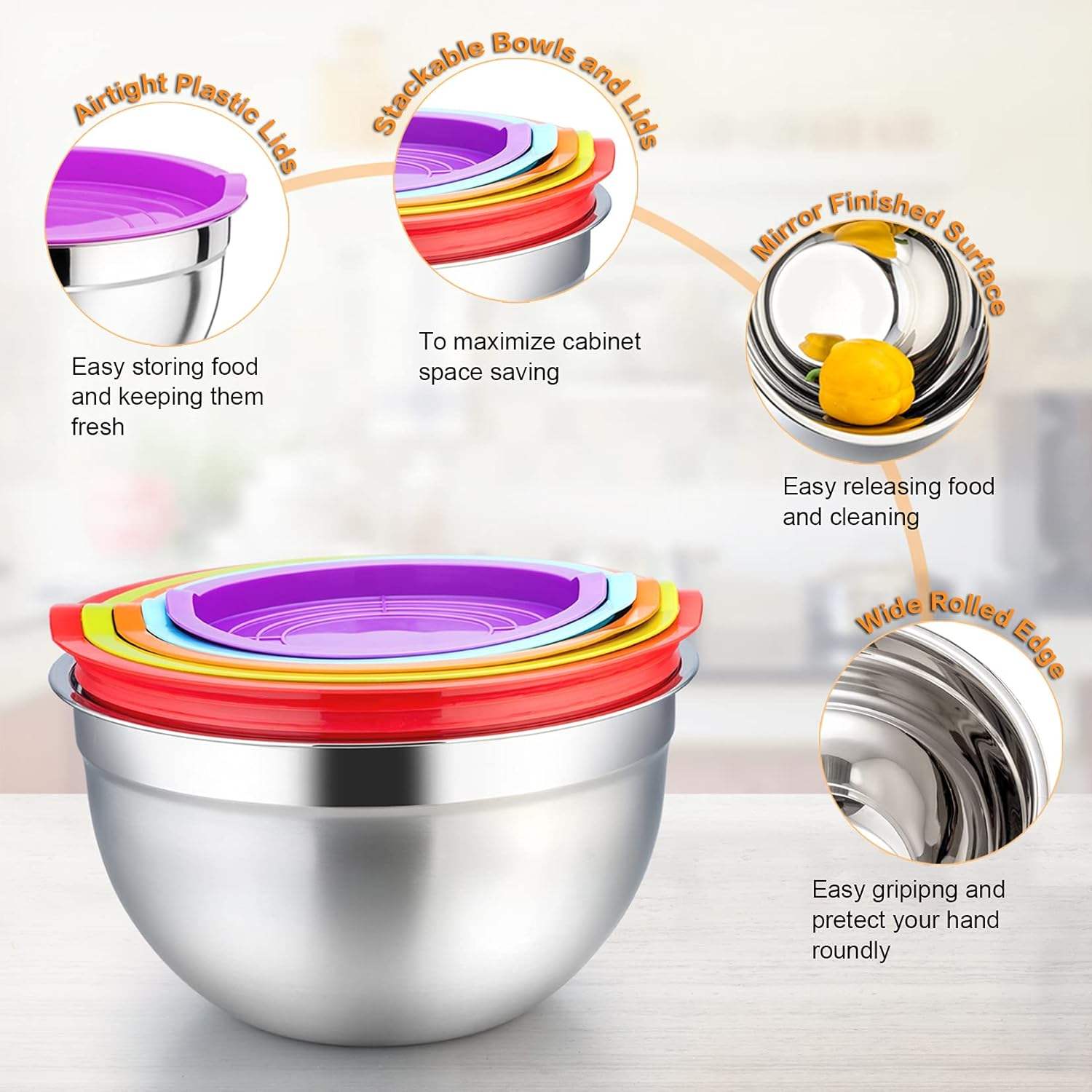
- Are the edges rolled, polished, or otherwise treated for safe handling?
- Are different grades available for different price levels?
- Can the product be developed as an OEM or ODM project?
- Can the supplier provide samples before mass production?
- What quality inspection process is applied before shipment?
- What are the production lead time and minimum order requirements?
A Practical Buyer Decision Process
- Define the target market and intended use.
- Determine whether the bowl is directly used for food preparation.
- Compare 201 and 304 against the required performance and target price.
- Specify the stainless steel mixing bowl material grade in the RFQ.
- Request samples and relevant material documentation.
- Confirm the final specification before mass production.
- Use the approved specification as the basis for quality inspection and shipment.
For a Wholesaler, retailer, supermarket, or specialty store, this approach can also simplify product segmentation. An economy range may prioritize cost efficiency, while a premium range can emphasize 304 stainless steel, finish quality, durability, and a stronger overall product proposition.
How Yesheng Can Support Stainless Steel Mixing Bowl Sourcing
Jiangmen Yesheng Metal Products Co. Ltd was established in 2017 and has focused on stainless steel products, including stainless steel salad bowls and other kitchenware. Its products are sold in European and American markets. The factory has multiple production workshops and equipment, while its own import and export company was established in 2023 to support production, procurement, sales, and export processes.
For buyers looking for a Customizable product, Yesheng can discuss product requirements such as specifications, appearance, and branding needs. OEM and ODM projects can be evaluated according to the product design and production requirements. The company also has production capacity for large orders, with factory equipment described as capable of handling orders exceeding 100,000 pieces.
Conclusion: Specify the Grade Before You Request the Quote
For most food-contact mixing bowl projects, 304 is a practical starting point, while 201 may suit selected cost-sensitive applications. Buyers should confirm the grade, application, market requirements, documentation, and quality controls before ordering. Contact Yesheng to discuss specifications, samples, OEM or ODM options, and a suitable quotation.